

How to Plan Cold Room Capacity Before You Build One
Learn what decides cold room capacity: stock type, daily loading, door use, insulation, location and power supply, plus what to prepare before a site visit.

Jigar Devpura
Founder, Maheshwari HVAC Solutions · Updated 28 November 2026
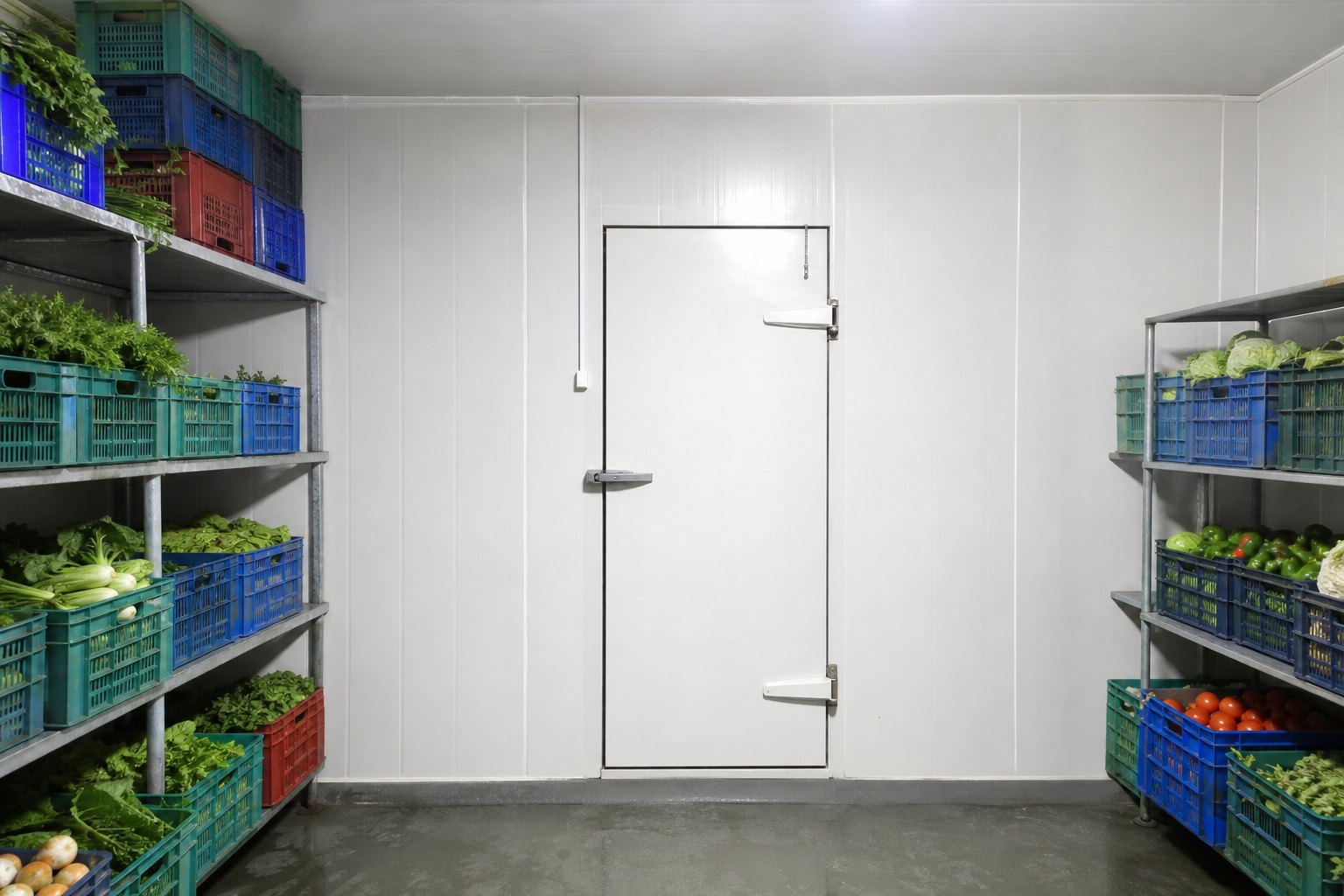
A cold room that is too small for the job runs flat out all day, struggles in peak summer and still lets stock warm up. One that is far too big wastes money to build and to run. Getting the capacity right at the planning stage is much easier than fixing it later.
Planning early gives you time to think, compare options and settle the layout before building starts. This guide explains what actually decides cold room capacity, in plain English.
Capacity is not just the size of the room
Many people start with a question like "I need a room this big, what machine goes with it?" Floor area and height matter, but they only tell you how much space you have. The refrigeration capacity depends on how much heat the system has to remove, and that comes from several sources:
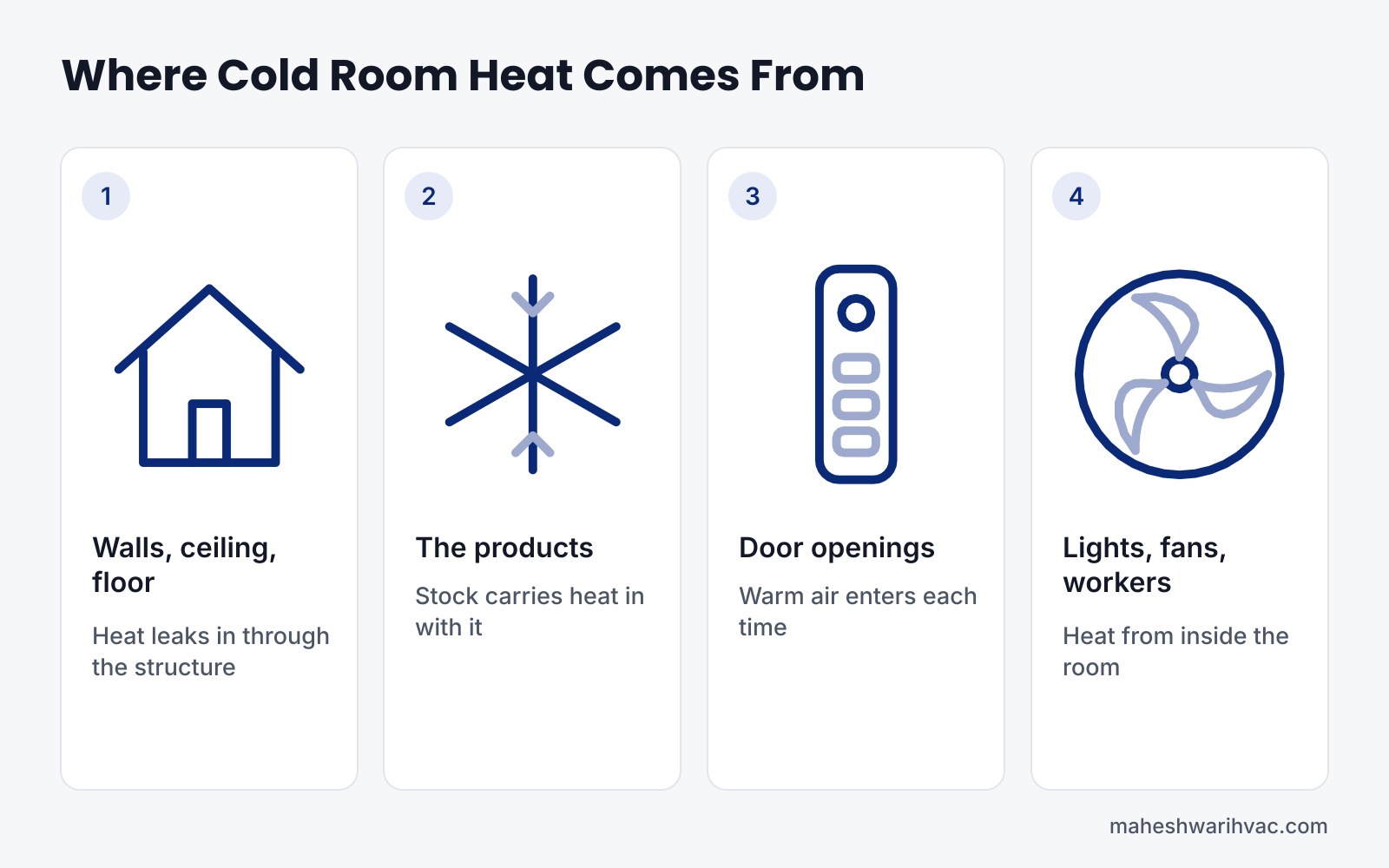
- Heat coming through the walls, ceiling and floor.
- Heat carried in by the products themselves.
- Warm air entering every time the door opens.
- Heat from lights, fans and people working inside.
A technician adds these up to choose the condensing unit and evaporator. If any of them is guessed badly, the system will be under- or over-sized.
What decides the right capacity
1. What you are storing and at what temperature
Fruit, vegetables, dairy, sweets, flowers, beverages and frozen food all need different storage temperatures. A chiller room and a freezer room are very different machines. The colder the target, the more work the system does, so say clearly what you will store, including anything you might add later.
2. How much goes in each day, and how warm it arrives
This is the most commonly missed point. A room holding a steady amount of stock is easy to run. A room that receives a large fresh batch every day, such as produce straight from the market or cooked food, has to pull that heat out quickly. Tell your installer:
- The most stock you expect to hold at one time.
- The largest amount that will be loaded in a single day.
- Whether items arrive already cool or at outside temperature.
3. How often the door opens
A hotel kitchen store, a dairy shop and a wholesale produce room all use their doors very differently. Frequent opening lets in warm, humid air that the system must cool and dry again. If your staff go in and out all day, the design should account for that. Items like a strip curtain, a smaller access door or a separate loading area can help, and your installer can suggest what suits your layout.
4. Insulation and construction
Panel thickness, joint quality, floor insulation and door seals all control how much outside heat leaks in. Good insulation reduces the heat the system has to remove, which helps it run more steadily. Poor joints and worn door gaskets quietly add load every hour of the day.
5. Where the room and the outdoor unit are located
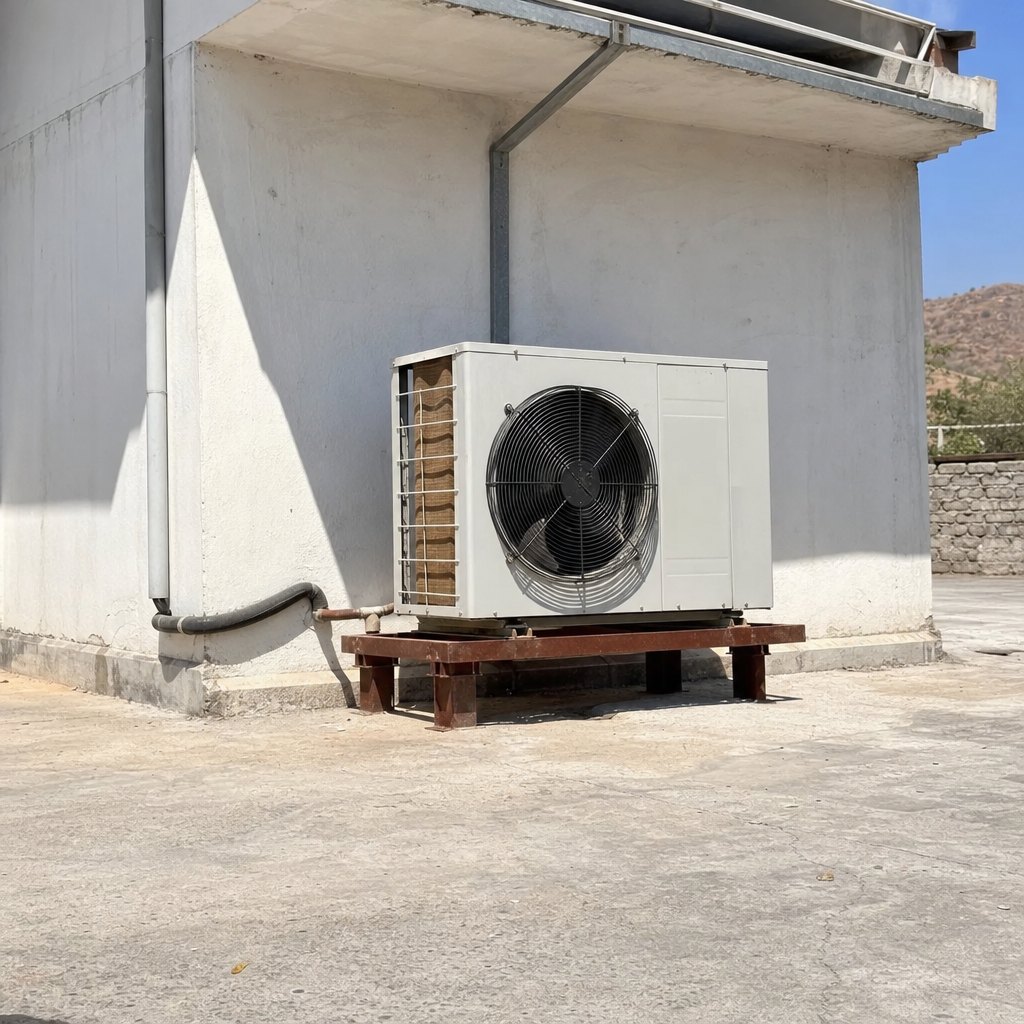
Udaipur summers are very hot, and that affects the outdoor side of the system. A condensing unit in direct sun, in a closed corner or next to a hot wall has to work harder to throw heat out. Plan for:
- Shade that does not block airflow.
- Enough open space around the unit for air to move freely.
- Easy, safe access for a technician to service it.
- Protection from dust, which clogs coils and reduces cooling.
6. The power supply
Voltage drops and fluctuations are common in many parts of India, and refrigeration compressors are sensitive to them. Ask your installer about suitable protection for the power supply, and have a qualified electrician check that the supply can handle the load. This is not something to improvise.
Common sizing mistakes
- Sizing for today only. If your business is growing, ask about what happens when stock doubles. Sometimes it is wiser to plan for expansion from the start.
- Sizing for cooler weather. A room that copes easily in the cooler months may struggle in peak summer. Always plan for the hottest days.
- Ignoring the loading pattern. A room that is fine with steady stock can fail when a large warm batch arrives.
- Choosing on price alone. A cheaper, undersized system can cost more in power, repairs and spoiled stock.
- Skipping maintenance planning. Even a perfectly sized system loses capacity when coils are dirty or door seals are damaged.
What to bring to a site visit
The more specific you are, the better the recommendation. Before you speak to anyone, write down:
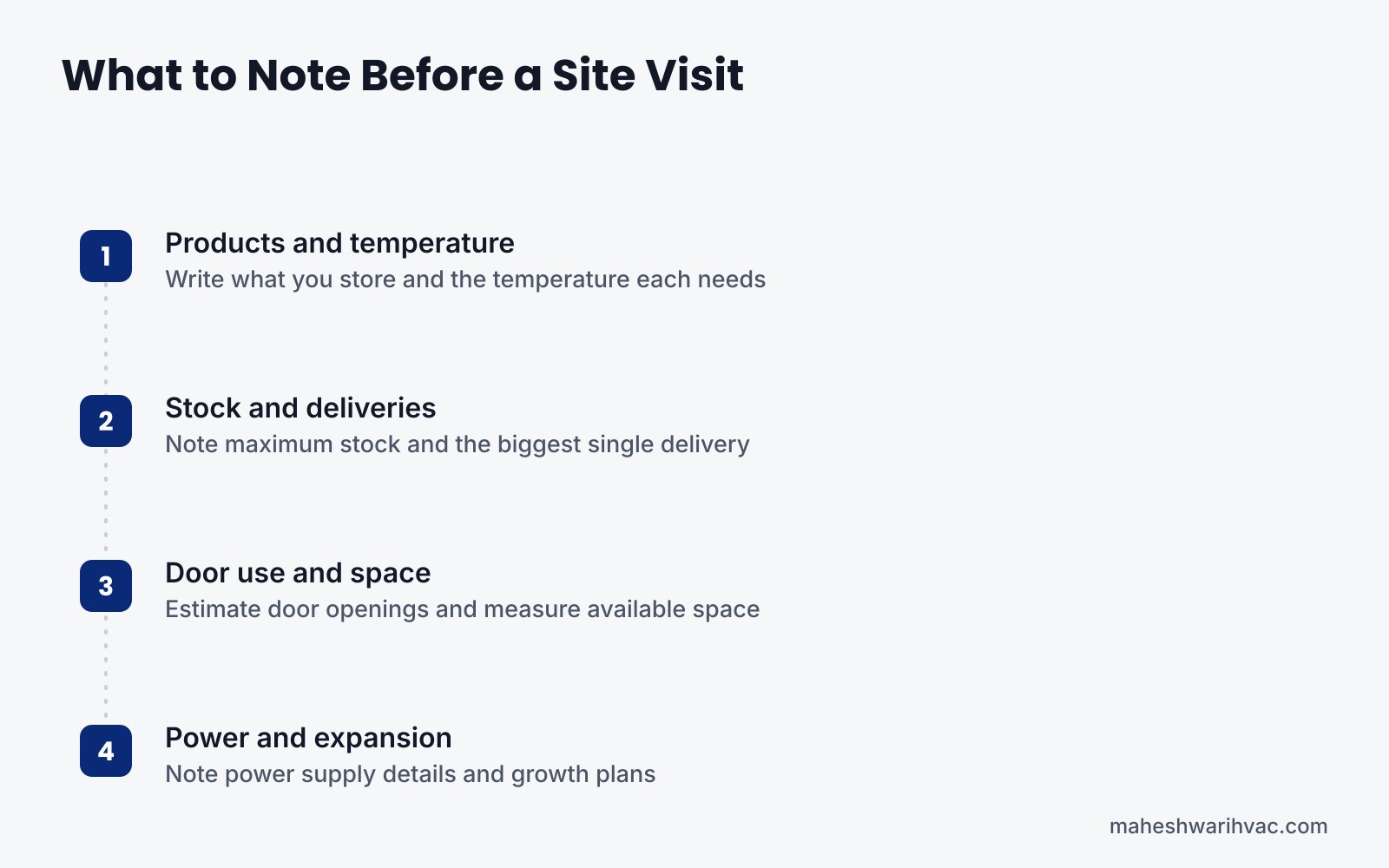
- The products you will store and the temperature each needs.
- The maximum stock at one time and the biggest single delivery.
- How many times a day the door opens, roughly.
- The space available, including height and the spot for the outdoor unit.
- Your power supply details, as far as you know them.
- Any plans to expand in the next few years.
A good technician will also want to see the site, because walls, sun exposure and access often change the design. You can read more about how we approach this on our cold room services page.
Looking after capacity once it is built
Dirty coils, blocked airflow and damaged door seals all reduce how much cooling a system delivers, and cold room machines are no exception. A few safe habits protect the capacity you paid for:
- Keep the door closed as much as possible and check that it shuts fully.
- Do not stack stock right up against the evaporator fans inside, as it blocks airflow.
- Leave gaps between stacks so cold air can circulate.
- Keep the area around the outdoor condensing unit clear of boxes, waste and plants.
- Tell a technician if you notice heavy frost, water on the floor, unusual noise or a door seal that is torn or not closing.
Everything beyond that, including coils, electrical parts and refrigerant, should be handled only by a trained technician. A regular maintenance plan keeps those checks on schedule; see our AMC plans for how that works.
Next step
If you are planning a new cold room or wondering whether your current one is undersized, we can visit, look at your products and layout, and explain the options without pressure. You can book a visit or send us a WhatsApp message with a few details about what you want to store.
Watch the reel on InstagramWatch on Facebook
Common questions
Can I decide cold room capacity just from the room size?
No. Room size is only one part. The product, storage temperature, daily loading, door use, insulation and outdoor heat all affect how much cooling the system needs.
Is a chiller room different from a freezer room?
Yes. They run at very different temperatures and use differently designed equipment. Decide which one you need based on what you store and for how long.
Why does my cold room struggle more in summer?
Outside heat is higher, so heat leaks in faster and the outdoor unit finds it harder to release heat. Dust on coils, worn door seals and blocked airflow make it worse.
What can I safely do to help my cold room perform better?
Keep the door closed, leave space around stock so air can move, and keep the area around the outdoor unit clear. Leave all electrical and refrigerant work to a trained technician.
Need a technician?
Book a visit and get your complaint number in a minute, or send a photo of the problem on WhatsApp.
Written with AI assistance and checked by Jigar Devpura. General information only: for electrical, gas or refrigerant faults, switch the unit off and call a trained technician.