

Do Inverter ACs Need a Stabiliser in Udaipur Homes?
Wondering if your inverter AC needs a stabiliser in Udaipur? Learn how voltage affects the compressor, what to check, and when to call a technician.

Jigar Devpura
Founder, Maheshwari HVAC Solutions · Updated 27 November 2026

A common question when buying an inverter AC is: "Do I still need a stabiliser?" The honest answer is: it depends on your power supply and your model. This guide explains why, in plain words, so you can decide with a technician instead of guessing.
Why voltage matters to an AC
The compressor is the hardest-working part of your AC. It is driven by an electric motor, and that motor is designed to run within a certain voltage range.
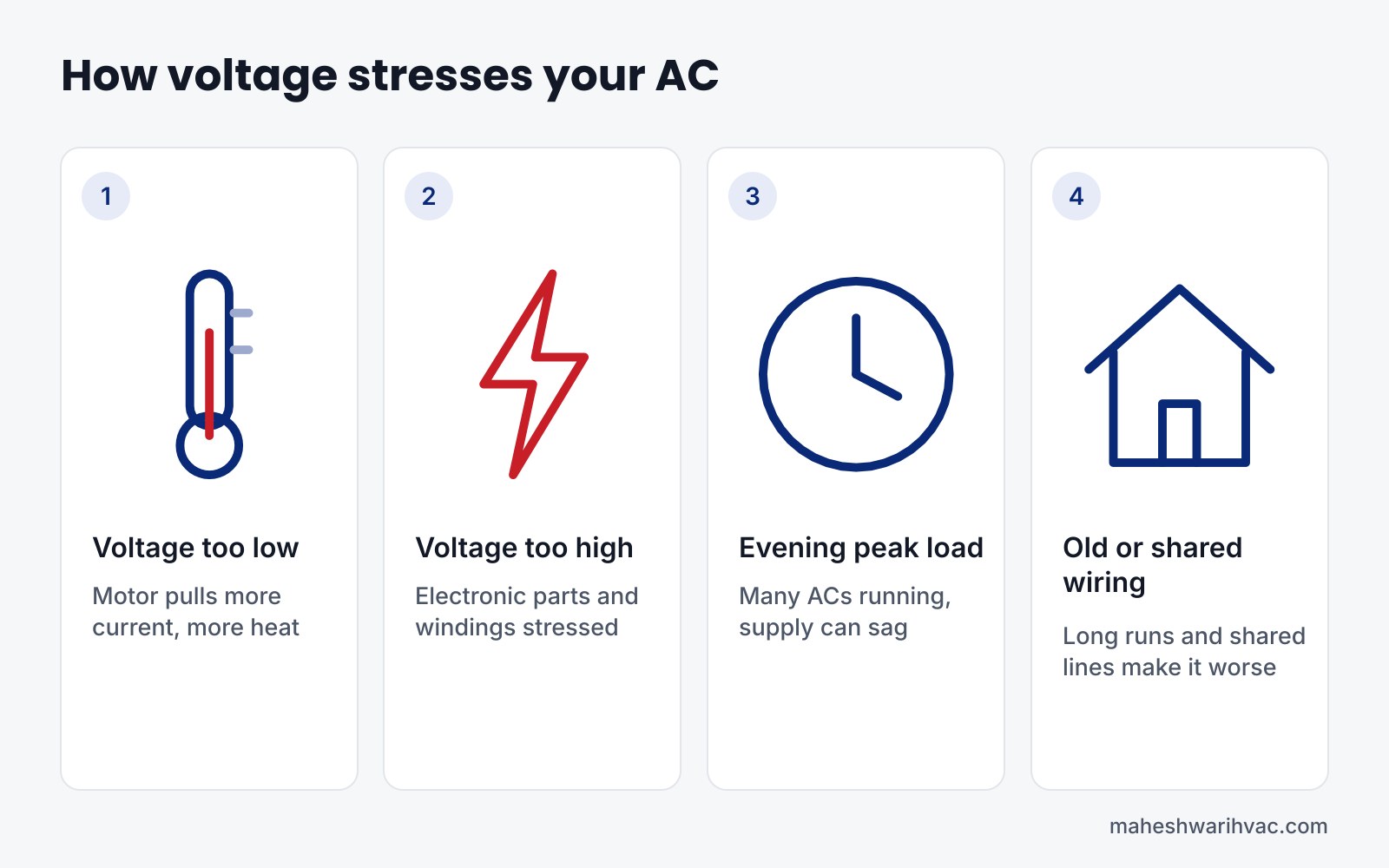
When voltage drops too low, the motor has to pull more current to do the same work. That extra current means extra heat inside the compressor. When voltage spikes too high, electronic parts and windings are stressed. Neither is good for a part that is expensive to replace.
In peak summer, when many homes and shops run their ACs in the evening, supply voltage can sag on some lines. Older wiring, long cable runs and shared lines make it worse.
What is different about an inverter AC
A normal (fixed-speed) AC switches its compressor fully on and off. An inverter AC changes the compressor speed to match the room's needs, which is why it is usually quieter and steadier.
To do this, it has an electronic control board. That board is more sensitive to voltage swings and surges than a simple on/off system. Many inverter ACs also include some built-in voltage protection, but the range and behaviour differ from model to model. Your manual or the manufacturer will tell you what your specific AC does. If the voltage goes outside the safe range, such an AC may stop itself, and some models show an error code.
So if your AC switches off during a voltage dip, that may be the protection doing its job. It is not necessarily a fault.
So do you need a stabiliser?
There is no single answer for every house. Here is a sensible way to think about it:
- Check your manual or the unit's label. It lists the voltage range the AC is designed to work in. Follow what the manufacturer says for your model.
- Watch your supply. If lights dim noticeably when the AC starts, or other appliances misbehave in the evening, your voltage may be unstable.
- Look at how the AC behaves. If it trips, restarts again and again, or shows protection-related error codes, voltage is one possible cause to rule out.
- If your supply is steady and the AC never trips, you may not need anything extra.
If voltage really is a problem, a stabiliser or a dedicated voltage protector can help. But the wrong one can cause trouble of its own.
Choosing a stabiliser: what to ask
A stabiliser is only useful if it suits the AC and your supply. Points to discuss with a technician or electrician:
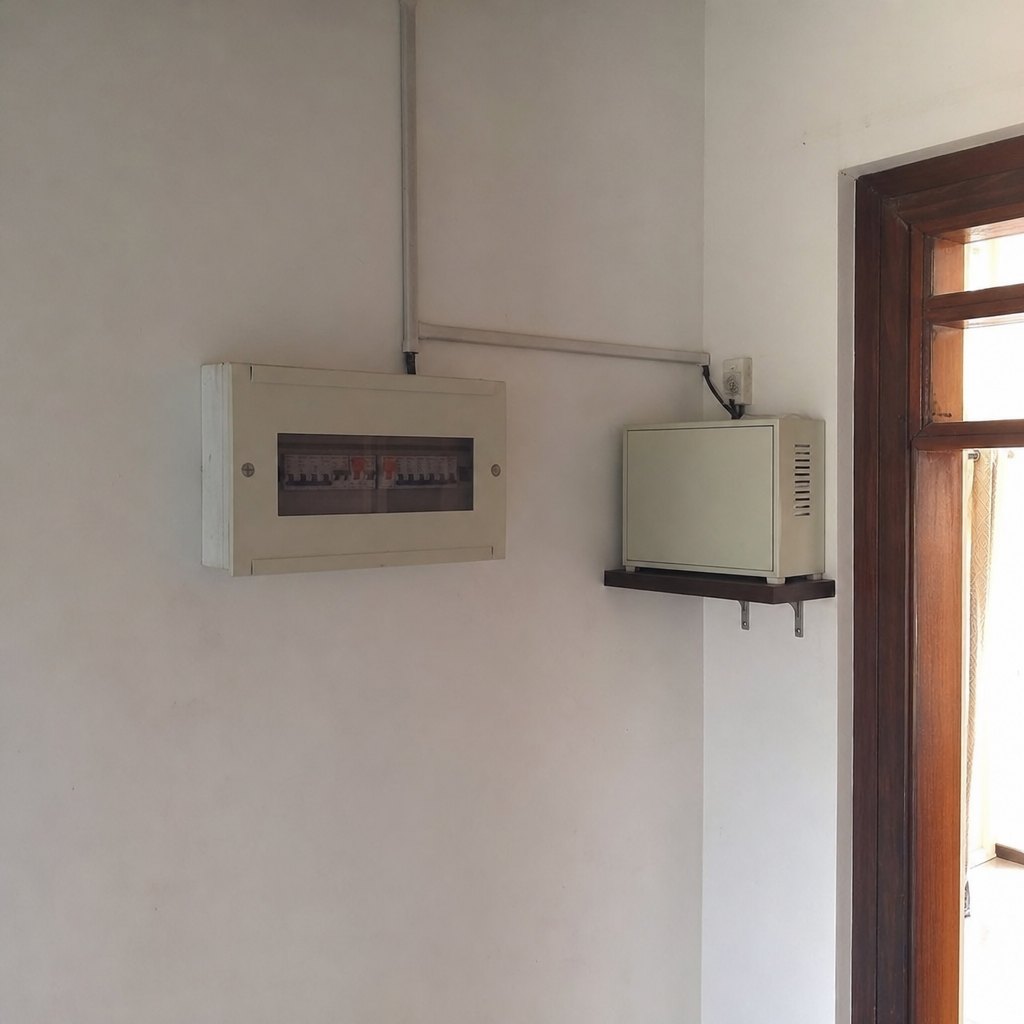
- Rating: It must be sized for the AC's load, including the surge when the compressor starts. An undersized unit struggles and can cut out.
- Type: Some are made for ACs specifically. A general-purpose unit may not respond well to AC loads.
- Voltage range: Look at the range it can correct, not just the label "stabiliser".
- Installation: The wiring must be done by a qualified electrician. Please do not connect or modify it yourself.
- One per AC or shared: Sharing one stabiliser between several appliances is usually not a good idea.
An AC voltage protector with a time delay is another option some people use. It cuts power when voltage is unsafe and waits before restoring it. Ask which suits your model.
Signs your AC may be suffering from voltage trouble
These are things you can observe safely, without opening anything:
- The AC stops and starts again by itself, repeatedly
- Lights or fans dim when the AC compressor kicks in
- An error code appears on the indoor display. You can look it up in our error code lookup
- The AC works fine in the morning but trips in the evening peak
- Other appliances such as the fridge or TV also act strangely
Note down when it happens. That detail helps a technician a lot.
What you can do safely
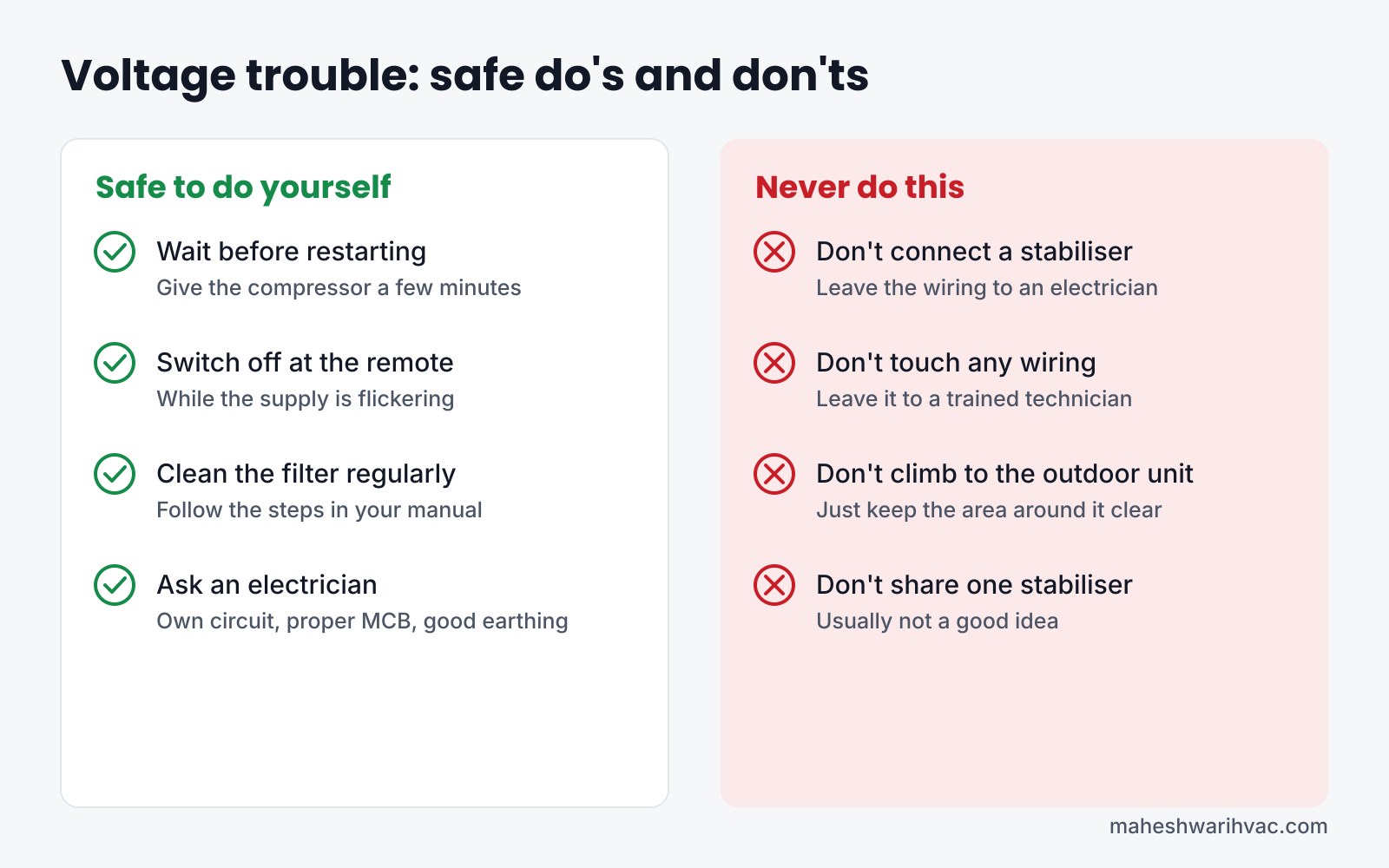
- Wait a few minutes before restarting after a power cut or trip. The compressor should not be started immediately after stopping.
- Switch the AC off at the remote during a flickering supply, and turn it on once power is steady.
- Clean the filter regularly, following the steps in your AC's manual. A clogged filter makes the AC run longer and harder. If you have a quick question, our HVAC help assistant can point you in the right direction.
- Keep the area around the outdoor unit clear. Do not climb up to it or touch it.
- Ask an electrician to confirm that the AC has its own circuit with a proper MCB and good earthing. Do not touch any wiring yourself.
Dirty coils make voltage problems worse
An AC that has not been cleaned for a long time works harder. Dust builds up on the filter and coils over a season, and when they are clogged, the compressor runs harder and for longer to cool the same room.
A compressor that is already working hard has less margin for a voltage dip. So a proper service will not fix a bad supply, but it removes one extra strain. If your AC trips often, a technician can check the AC itself and help you tell apart a supply problem from an AC problem. You can read more on AC repair and installation.
Shops, offices and bigger systems
If you run several ACs, a VRV/VRF system or a cold room, the power question is bigger. Many commercial systems use three-phase supply, where a missing or unbalanced phase can damage a compressor. Ask your technician whether phase protection is fitted and suitable. This is not something to attempt yourself.
When to call a technician
Call for a visit if:
- The AC trips repeatedly, even after a few minutes' rest
- An error code keeps coming back
- You hear a humming sound but the outdoor fan or compressor does not start
- You are buying a new AC and want advice on protection for your home's wiring
In each case, switch the AC off and leave the rest to a trained technician. If you would like someone to look at your AC and supply, you can book a visit with Maheshwari HVAC Solutions or message us on WhatsApp.
Common questions
Do all inverter ACs need a stabiliser?
Not always. Many inverter ACs have built-in voltage protection and a stated operating range. Check your manual, watch how your power supply behaves, and ask a technician if you are unsure.
Why does my AC switch off when voltage drops?
Most modern ACs stop themselves when voltage goes outside a safe range, to protect the compressor and control board. It is usually protection working, but frequent trips should be checked.
Can I connect a stabiliser to my AC myself?
No. Stabilisers must be sized correctly and wired by a qualified electrician. Incorrect connections can be dangerous and may damage the AC.
How long should I wait before restarting the AC after a power cut?
Wait a few minutes before switching it on again, so the compressor is not started straight after stopping. Many ACs also have a built-in delay.
Need a technician?
Book a visit and get your complaint number in a minute, or send a photo of the problem on WhatsApp.
Written with AI assistance and checked by Jigar Devpura. General information only: for electrical, gas or refrigerant faults, switch the unit off and call a trained technician.