

AC Not Cooling Properly? Safe Checks Before You Call
Your AC is running but the room stays warm? Try these safe checks first, learn common causes, and know when a technician in Udaipur is needed.

Jigar Devpura
Founder, Maheshwari HVAC Solutions · Updated 27 November 2026
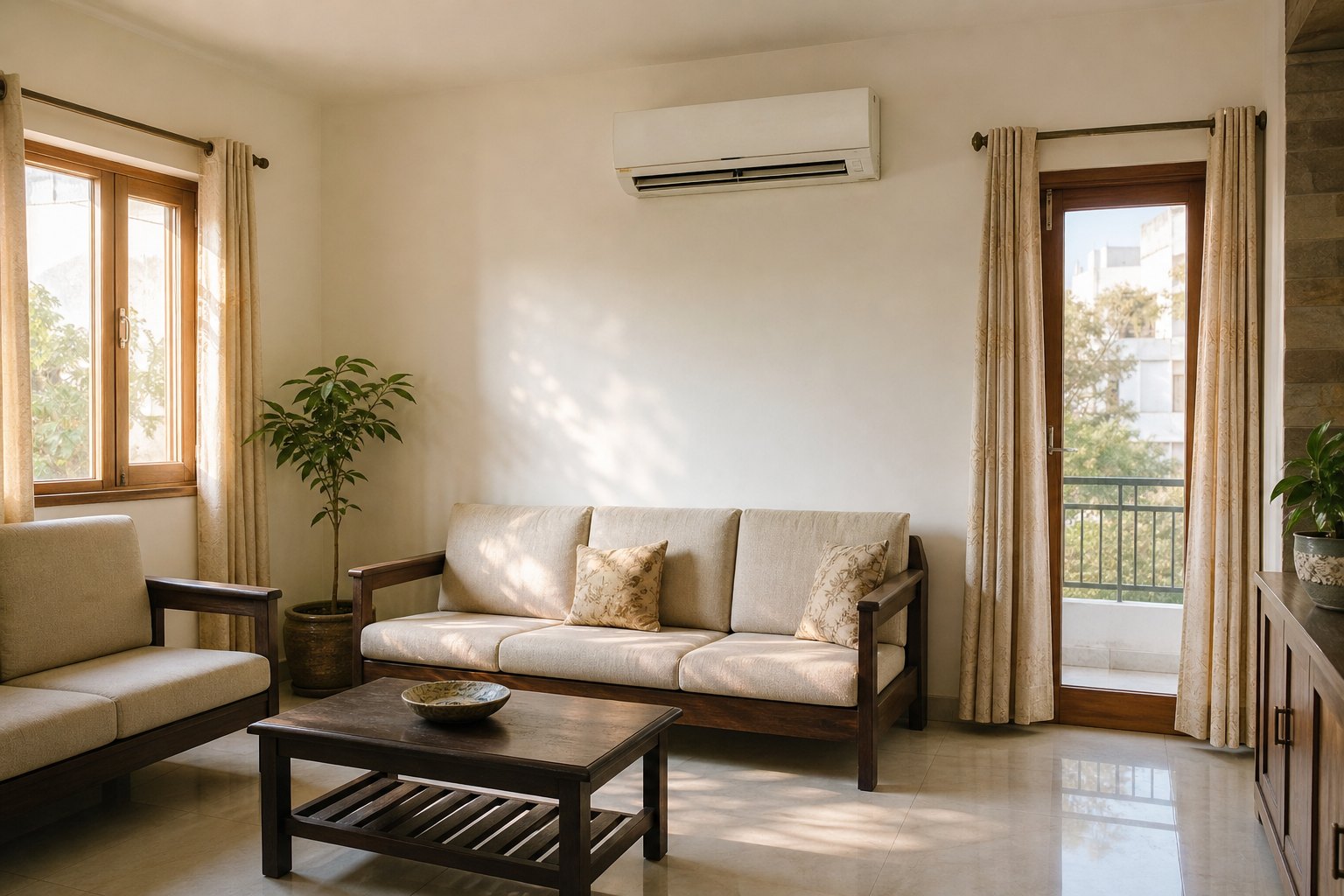
An AC that runs but does not cool the room is frustrating, especially when you are not sure whether it is a small thing or a real fault. Sometimes the cause is a simple setting or a clogged filter. Other times it needs a trained technician with proper tools. This guide helps you tell the difference, using only steps that are safe for a homeowner.
Start with the two-minute checks
These sound obvious, but they are quick and worth ruling out first.
- Mode: Make sure the remote is set to Cool rather than Fan or Dry.
- Temperature: Set it clearly below the current room temperature, to a level you find comfortable.
- Fan speed: A very low fan speed or an Eco or Sleep mode can hold back cooling.
- Remote: Weak batteries can make the remote send incomplete commands. Replace them and try again.
- Doors and windows: Check that nothing is left open, including a balcony door or a gap under a door.
If the unit has just been switched on after a power cut or a long break, give it a few minutes. AC units wait before the outdoor part starts, which protects the compressor.
Clean the filter
Dust builds up on the indoor filter over time. When it clogs, less air passes through the unit, so the room cools slowly and the AC works harder.
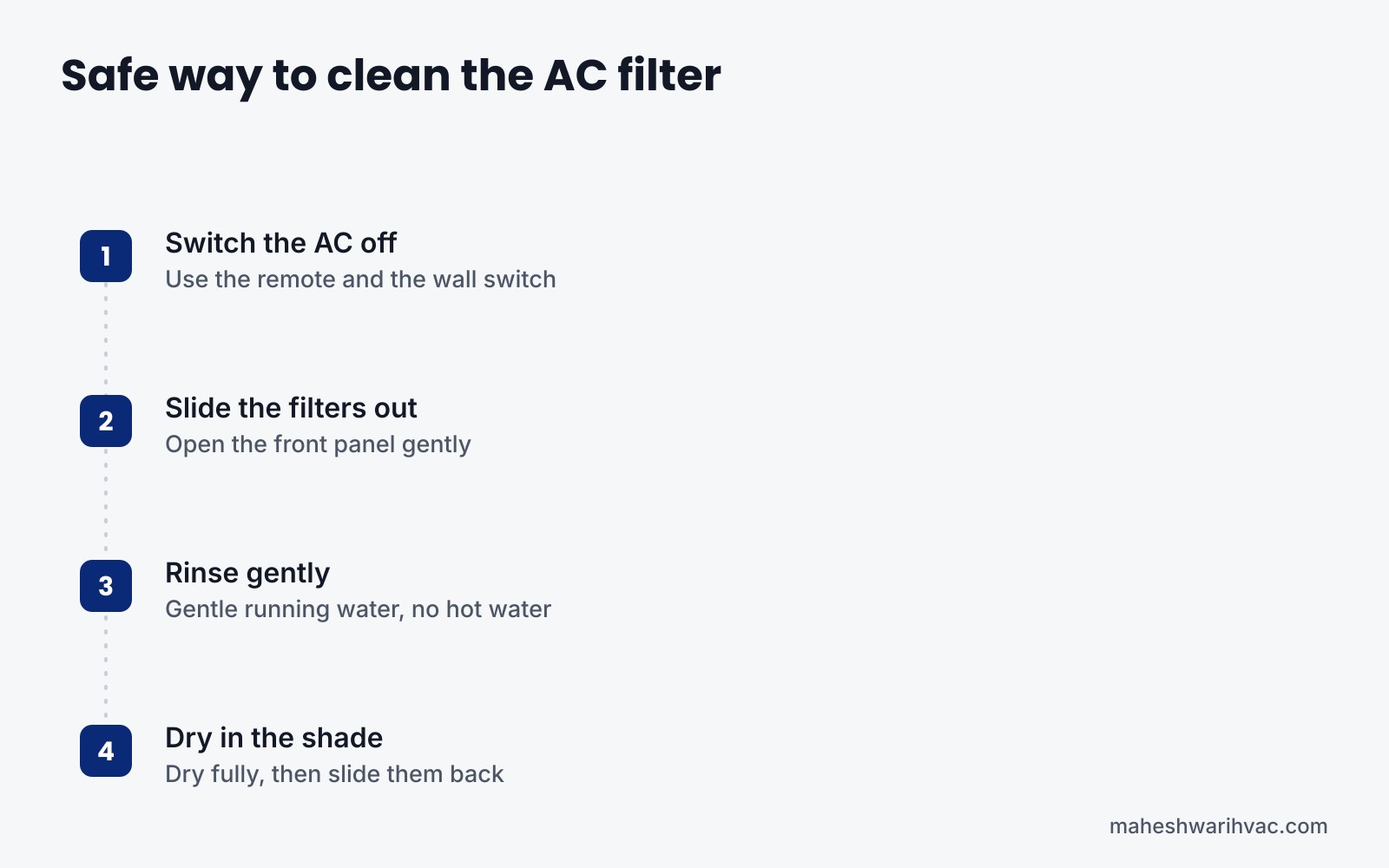
Safe way to do it:
- Switch the AC off with the remote and at the switch.
- Open the front panel gently and slide the filters out.
- Rinse them under gentle running water. Do not scrub hard or use hot water.
- Dry them fully in the shade, then slide them back.
That is as far as a homeowner should go. Do not open the unit further or touch any wiring.
Look at the area around the outdoor unit
The outdoor unit throws out the heat that the AC removes from your room. If that heat cannot escape, cooling drops.
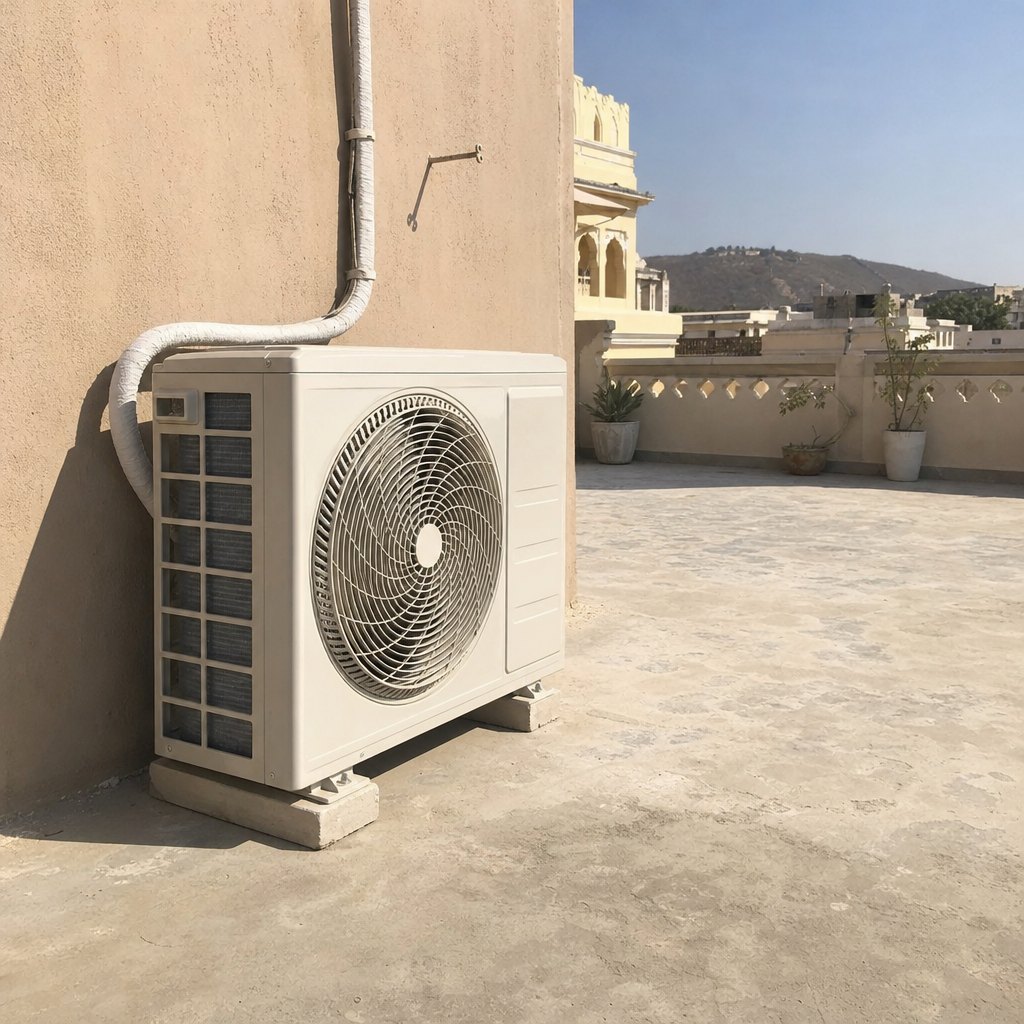
From a safe spot, check whether:
- Boxes, clothes, planters or scrap are stacked close to the unit.
- A cover, sheet or plastic wrap is still on it after the cooler months.
- A wall or balcony grille is blocking airflow.
- Dust, leaves or bird nests are collecting around it.
Switch the AC off before you clear anything away. Do not climb to reach an outdoor unit, and do not spray water into it. If it sits on a ledge, an upper wall or a rooftop, leave it to a technician.
Ask whether the room is asking too much
Sometimes the AC is healthy but the room is simply too demanding. Think about whether any of these apply:
- A top-floor room under a terrace that heats up all day.
- A west-facing room or a shop with a large glass front.
- A kitchen, or a room where more people or equipment have been added over time.
- A room where a smaller AC was fitted to save cost.
An undersized AC may seem fine in cooler weather and then struggle in peak summer, when the outside heat is at its highest. You can get a rough idea of the right size with our AC size calculator.
Signs that point to a technical fault
If the checks above do not help, one of these usually needs a technician:
- The indoor fan blows, but the outdoor unit fan or compressor is not running.
- The air is only slightly cool, or feels warm.
- Ice has formed on the pipes or indoor unit.
- The AC trips the MCB or switches off by itself.
- There is water dripping inside, a burning smell or an unusual noise.
- The display is blinking a code. You can look it up with our error code lookup to understand what it is pointing to.
If you notice a burning smell, sparking or repeated tripping, switch the AC off and do not keep trying to run it.
What a technician will usually look at
Knowing the common causes helps you understand what you are paying for:
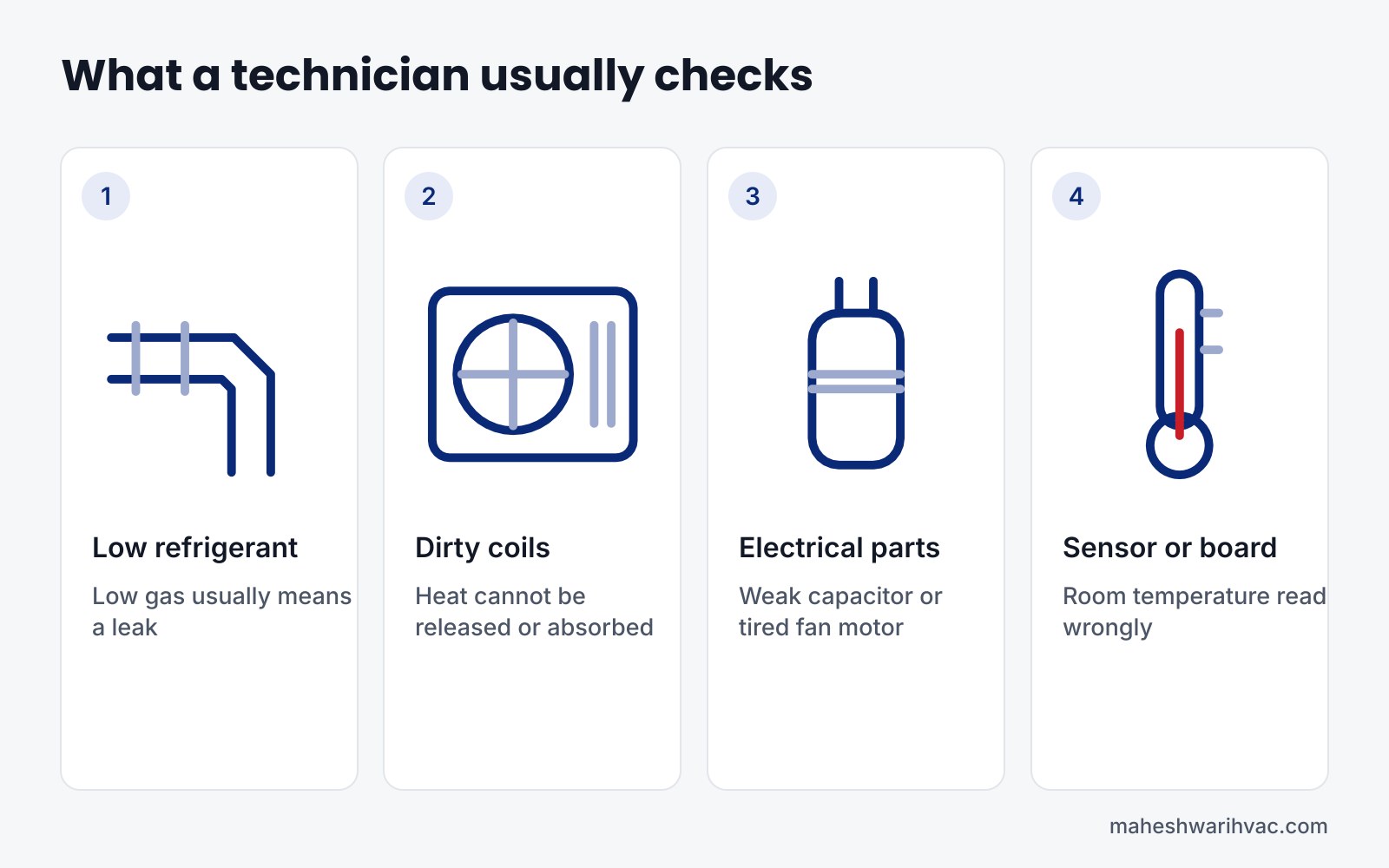
- Low refrigerant due to a leak. Refrigerant does not get "used up". If it is low, there is a leak somewhere. Topping it up without finding and fixing the leak only gives temporary relief.
- Dirty coils. A choked outdoor coil cannot release heat, and a dirty indoor coil cannot absorb it.
- Electrical parts. A weak capacitor or a tired fan motor can stop the outdoor unit from running properly.
- Sensor or board faults. The AC may read the room temperature wrongly and switch off early.
- Compressor trouble. This is the serious one, and it is best caught early, before it becomes a bigger repair.
All of this involves refrigerant and live electrical parts, so it should only be done by a trained person.
Voltage and power supply
Power supply can also affect how an AC performs. If your lights dim when the AC starts, or the AC cools well at some hours and poorly at others, mention it to the technician. Do not try to bypass any protection yourself. The technician can check whether the problem is the supply, the AC or both.
What to tell us when you book
A few details save time on the visit:
- Brand and approximate age of the AC (Daikin, LG, Samsung, Voltas, Blue Star, Carrier, Panasonic, Haier, Midea and so on).
- Whether it is a split, cassette or part of a VRV system.
- When the problem started, and whether it is sudden or gradual.
- Whether the outdoor unit is running.
- Any error code or blinking light.
- When it was last serviced.
We cover AC repair and installation for homes and shops in Udaipur.
Why not leave it until summer
A weak cooling problem is easy to put off when the weather is mild. But a fault found now can be sorted before the next hot season, when you will need the AC every day and a breakdown is far more uncomfortable.
If your AC is not cooling the way it should, you can book a visit or message us on WhatsApp, and a technician can look into it.
Watch the reel on InstagramWatch on Facebook
Common questions
Why is my AC running but not cooling the room?
Common reasons are a wrong mode or setting, a clogged filter, blocked airflow around the outdoor unit, or a room too hot for the AC's size. If these are fine, a technician should check for low refrigerant, dirty coils or electrical faults.
Can I top up the gas myself if my AC is not cooling?
No. Handling refrigerant needs training and proper equipment. Low gas usually means a leak, so the leak has to be found and repaired by a technician.
How often should I clean the AC filter?
It depends on how dusty your home or shop is and how much you use the AC. Check the filter regularly during heavy use, and clean it whenever it looks visibly dirty.
Could my AC be too small for the room?
Yes. An undersized AC may cope in mild weather but fail in peak summer. Our AC size calculator gives a rough guide, and a technician can confirm it on site.
Need a technician?
Book a visit and get your complaint number in a minute, or send a photo of the problem on WhatsApp.
Written with AI assistance and checked by Jigar Devpura. General information only: for electrical, gas or refrigerant faults, switch the unit off and call a trained technician.